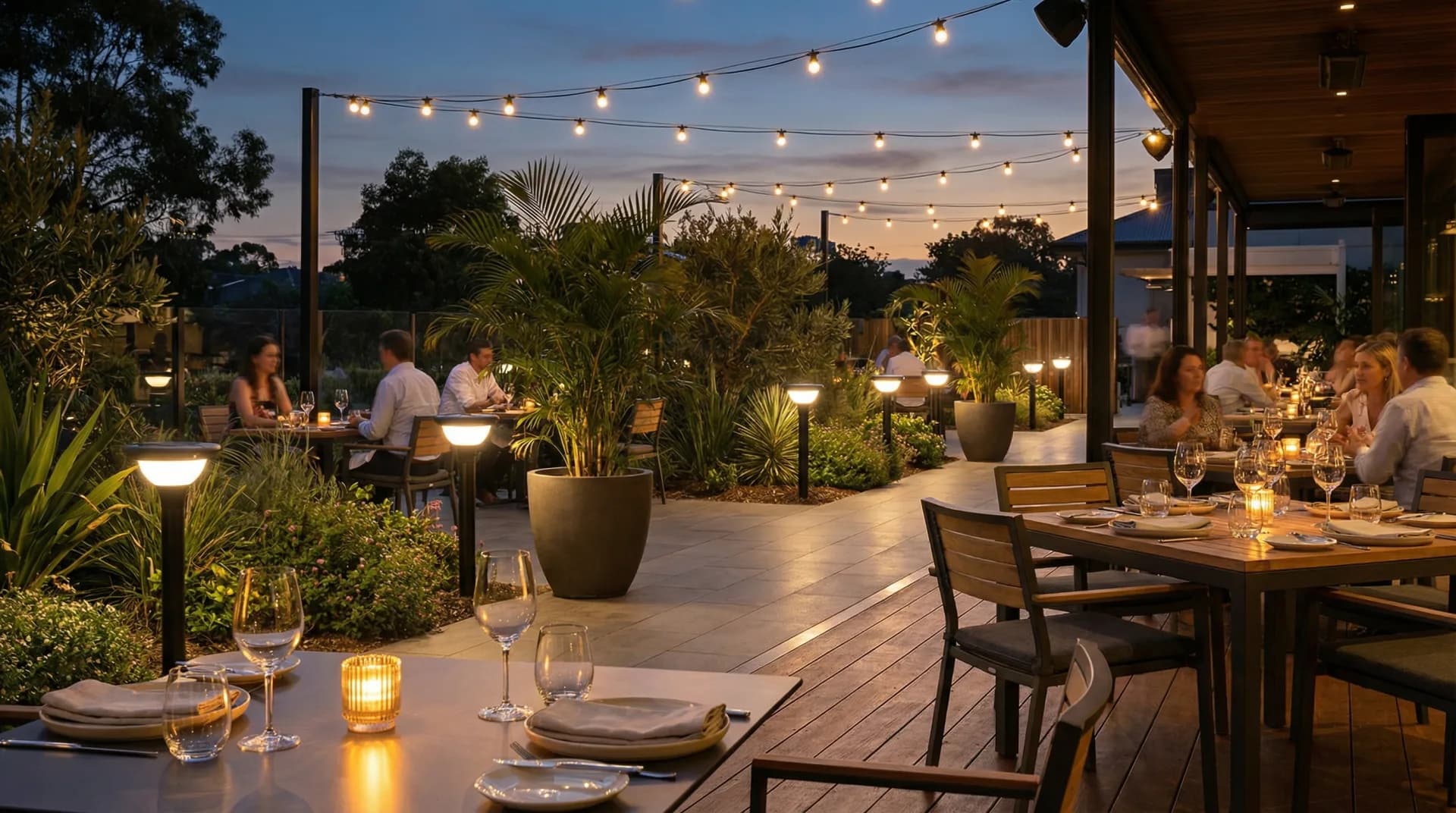
The Alfresco Revolution
COVID-19 fundamentally changed how Australians dine. The preference for outdoor spaces has remained strong. Hospitality venues with quality outdoor areas now command premium bookings, especially during Melbourne's warm evenings and Sydney's year-round temperate climate.
But an outdoor area is only as good as its ambiance after dark. Harsh floodlighting creates sterile, unwelcoming spaces. Poor lighting makes customers feel unsafe and leaves early. The right lighting strategy transforms your courtyard, rooftop, or footpath into a destination that keeps guests ordering.
How Lighting Impacts Revenue
Creating the Right Atmosphere
Hospitality lighting is about psychology, not just visibility. The goal is to create spaces where guests feel relaxed, special, and inclined to stay. This requires layered lighting at different heights and intensities.
Hospitality Lighting Principles
- Use 2700-3000K colour temperature
- Avoid cool white (4000K+)
- Mix real flame with LED
- Dimming capability essential
- Minimum 3 height levels
- Vary fixture styles
- Create light and shadow
- Highlight focal points
- Illuminate steps and edges
- Mark entry/exit paths
- Adequate egress lighting
- Balance ambiance with visibility
- Dimmable fixtures
- Moveable elements
- Seasonal adjustments
- Event configuration options
Why Solar for Hospitality
Zero Running Costs
Solar lights eliminate electricity costs for outdoor areas—straight to your bottom line
No Installation Disruption
Install without closing, trenching through pavement, or disrupting service
Unique Features
Flame-effect solar lights create firepit ambiance without fire permits or gas
Sustainability Story
Eco-conscious lighting resonates with customer values and brand positioning